


Opening a bank account in Turkey is the regulated process through which a foreign national or foreign-owned company becomes a customer of a Turkish bank under Law No. 5411 (Banking Law), Law No. 5549 (Anti-Money Laundering), and MASAK customer identification standards, accessible remotely through a notarized Power of Attorney without travel to Turkey.
Opening a bank account in Turkey is simple in mechanics but strict in compliance. A Turkish bank can activate an account within one to two business days, yet the bank cannot legally open that account without satisfying customer identification obligations that begin before the application is filed. The speed at the counter is real; the documentary architecture behind that speed is not optional.
The account itself is not the destination, it is the gateway. Foreign investors who treat the account opening as a procedural moment inherit a banking relationship that requires ongoing source-of-funds substantiation under Law No. 5549 and the Regulation on Measures Regarding the Prevention of Laundering Proceeds of Crime and Financing of Terrorism (2007/13012). The investors who treat the opening as the first stage of a regulated financial relationship build a file that withstands MASAK review, satisfies foreign exchange reporting under CBRT Decree No. 32, and supports the broader investment, residence, or citizenship strategy that the account exists to enable.
Oznur & Partners manages the entire bank account opening process for foreign investors and foreign-owned Turkish companies, from obtaining the Turkish tax identification number through document preparation, bank selection, AML compliance coordination, and account activation. For the broader legal architecture of forming the Turkish entity that the corporate account serves, see our companion guide on company formation lawyer in Turkey.
⚖️ Can a Foreigner Open a Bank Account in Turkey?
Yes. Foreign nationals, whether resident in Turkey or abroad, can open both personal and corporate bank accounts in Turkey. Under Article 76 of Banking Law No. 5411, the only mandatory precondition is documentary identification including a Turkish tax identification number (vergi kimlik numarası); banks are statutorily prohibited from opening accounts, executing transfers, or providing financial services to clients who cannot present these credentials. A Turkish residence permit is not required for a personal account, and foreign-owned Turkish companies can open corporate accounts from the moment of Trade Registry registration.
The structural distinction between a personal account and a corporate account matters from the first day. A personal account holds the foreign national’s individual funds and supports activities such as real estate acquisition in the investor’s own name, citizenship-by-investment property purchases under Article 12(b) of Law No. 5901, and personal residential expenses during the investor’s time in Turkey. A corporate account, in the name of the Turkish entity, is mandatory for all business transactions, payroll under Social Security Law No. 5510, VAT-related receipts and payments, and corporate tax filings. Mixing the two creates documentary problems that surface at the first tax audit, and Turkish accounting standards do not permit retroactive reclassification of transactions between accounts.
Foreign companies that do not establish a Turkish entity can open a branch account in Turkey through their registered Turkish branch under Article 40 of TCC No. 6102. The branch account operates under the foreign parent’s name with Turkish registration, and is structurally different from a Turkish company corporate account in its tax treatment and reporting obligations. Sophisticated foreign investors routinely ask which account type best supports their planned activity in Turkey, and the answer is rarely the simplest one to open and almost always the one that matches the legal vehicle the funds will flow through.
⚖️ Which Banks Are Best for Foreign Investors?
Turkey’s banking sector operates under the supervision of the Banking Regulation and Supervision Agency (BDDK) and consists of state-owned banks, private commercial banks, participation (Islamic) banks, and foreign-incorporated banks operating in Turkey. The choice of bank is a strategic decision, not a preference one, because each category carries distinct operational characteristics for foreign account holders.
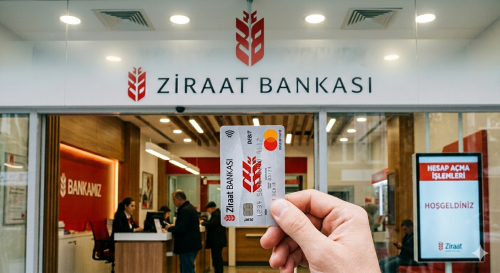
State-owned banks include Ziraat Bankası, Vakıfbank, and Halkbank. These banks are widely used for citizenship-by-investment transactions because of their experience with the legal documentation requirements of citizenship applications, their dedicated foreign investment desks, and the government-backed reputation that simplifies source-of-funds presentations. Their FX trading desks are well-resourced, and their relationships with the Central Bank of the Republic of Turkey support the foreign exchange reporting obligations under CBRT Decree No. 32.
Private commercial banks include Garanti BBVA, İş Bankası, Yapı Kredi, and Akbank, among others. These banks typically offer more developed digital banking platforms, broader multi-currency account options, English-language relationship management, and more flexible trade finance structures for foreign-owned operating companies. Their AML compliance processes are often more granular than state-owned banks, which can produce faster onboarding for clients with well-prepared source-of-funds documentation, and longer onboarding for clients whose documentary architecture requires development.
Participation (Islamic) banks include Albaraka Türk, Kuveyt Türk, and Türkiye Finans, among others, and operate under the participation banking framework regulated by BDDK with Sharia-compliant product structures. For Gulf Cooperation Council clients and other investors requiring Sharia-compliant banking relationships, these institutions are the structurally appropriate choice. Their account opening process follows the same MASAK identification standards but their product offerings differ materially.
The strongest bank for a specific foreign investor depends on the investor’s transaction volume, multi-currency requirements, trade finance needs, citizenship pathway, and sectoral profile. Our Turkish investment lawyers maintain working relationships with relationship managers at each of the institutions above and coordinate introductions that align with the client’s documented profile rather than the bank’s headline marketing.
⚖️ How Does the Bank Account Opening Process Work Step by Step?
The opening process is procedurally linear but documentarily strict. Each stage rests on the previous one, and a defect at the early stages produces a delay or refusal at the later ones that cannot be remediated without restarting the affected stage.
Step 1, Turkish Tax Identification Number (Vergi Kimlik Numarası). The tax number is the single most critical precondition. Under Article 76 of Banking Law No. 5411, no Turkish bank may open an account for a customer who has not presented a Turkish tax identification number. The number is issued by the local tax office (Vergi Dairesi) under the General Communiqué on Tax Identification Numbers Series No. 4, which extended use of foreign identification numbers to non-resident applicants. The number can be obtained remotely through a notarized and apostilled Power of Attorney granted to a Turkish lawyer, typically in one to two business days from PoA delivery in Turkey.
Step 2, Document Preparation Under MASAK Identification Standards. Customer identification obligations under Articles 3 and 7 of Law No. 5549 and the 2007/13012 Regulation on Measures require the bank to verify the customer’s identity, address, and the nature of the proposed banking relationship before the account is activated. For a foreign individual, the file includes a valid passport (apostilled and translated, or consularized for non-Apostille jurisdictions), proof of address in the country of residence, the Turkish tax identification number, biometric photographs, and a customer identification form (Müşteri Tanıma Formu) signed at the bank or by the lawyer under PoA. For a foreign company opening a corporate account, the file additionally includes the parent company’s apostilled certificate of incorporation, articles of association, current trade registry extract, board resolution authorizing the account opening, and a notarized power of representation for the individual signing on behalf of the foreign entity.
Step 3, Source-of-Funds Substantiation. For transactions or initial deposits above the MASAK identification thresholds (currently TRY 85,000 for general transactions and TRY 15,000 for electronic transfers under Article 5 of the Regulation on Measures), the bank requires documentary evidence of the legitimate origin of the funds. This requirement applies regardless of the investor’s nationality or the bank’s category. The acceptable evidentiary architecture varies by source jurisdiction: corporate distributions, real estate liquidation, employment income, business sale proceeds, and inheritance each carry distinct documentary requirements that the bank’s compliance team will examine before account activation.
Step 4, FATCA and CRS Self-Certification. Foreign account holders are required to complete self-certification forms under two parallel international information-sharing regimes. The United States Foreign Account Tax Compliance Act (FATCA) applies through the US-Turkey Model 1 Intergovernmental Agreement in effect since 2015; US citizens and US tax residents complete IRS Form W-9 equivalents at account opening. The OECD Common Reporting Standard (CRS) applies to tax residents of all participating jurisdictions, currently over 100 countries; non-US foreign nationals complete CRS self-certification forms identifying their tax residency. False or incomplete certification creates personal exposure under both the source-country tax law and Turkish AML law.
Step 5, Account Activation and Initial Funding. Following document approval, the bank issues the account number (IBAN) and activates the account in its core banking system. The activation typically occurs within one to two business days from complete document submission. Initial funding must arrive through compliant channels: foreign currency wire transfer from the foreign account holder’s foreign bank account, with the transfer message containing complete sender data as required by MASAK Communiqué obligations on electronic fund transfers. Third-party transfers, structured deposits to avoid identification thresholds, or cash funding above MASAK thresholds will trigger suspicious transaction reporting under Article 4 of Law No. 5549.
Step 6, Foreign Exchange Documentation Under CBRT Decree No. 32. For foreign currency transactions exceeding the relevant CBRT thresholds, the bank coordinates the issuance of a Foreign Exchange Purchase Document (Döviz Alım Belgesi, DAB) or Foreign Exchange Sale Document (Döviz Satım Belgesi, DSB) as appropriate. The DAB is particularly significant for citizenship-by-investment real estate purchases, where it serves as primary evidence of the foreign currency origin of the purchase funds.
The full account-opening timeline, assuming complete documentation at submission, is one to two business days for personal accounts and two to five business days for corporate accounts, with additional time for source-of-funds clarification where the documentary architecture is complex. This is precisely why foreign investors increasingly ask when they should engage a Turkish lawyer for the bank account opening, and the answer is consistently before the first international wire transfer is initiated, not after the bank requests source-of-funds clarification.
⚖️ Can a Bank Account Be Opened Remotely Without Visiting Turkey?
Yes. A notarized and apostilled Power of Attorney executed in the foreign investor’s country of residence authorizes a Turkish lawyer to obtain the Turkish tax identification number, complete the customer identification forms at the bank, submit the documentary file, sign the banking services agreement on behalf of the principal, and collect the activated account credentials. The original PoA is couriered to Turkey or delivered through consular channels; the lawyer in Turkey handles the bank-side process from there.
The PoA must be precisely scoped to the legal acts the lawyer will perform. A generic PoA authorizing “banking transactions” does not satisfy the specificity standard applied by Turkish banks under their MASAK compliance protocols. Each material act, the application for the tax identification number, the signing of the customer identification form, the opening of the account, the execution of the banking services framework agreement, the foreign exchange documentation, must be enumerated in the PoA in language that survives bank legal review. The drafting of the PoA is the legal step that determines whether the remote opening proceeds smoothly or stalls at the first bank counter encounter.
Remote opening is fully supported across all major Turkish banks for both personal and corporate accounts. The procedural sequence for remote opening is identical to in-person opening except for the document execution stage, which occurs in the home country before a notary and is then authenticated through apostille (Hague Convention countries) or consular legalization (non-Apostille countries) for use in Turkey.
⚖️ AML, MASAK, and the Compliance Layer Most Foreign Investors Underestimate
The most consequential dimension of Turkish bank account opening is not the documentary checklist; it is the AML and counter-terrorism financing compliance framework that surrounds every step. Foreign investors who treat this layer as a procedural formality routinely encounter problems that documentary remediation cannot solve after the fact.
Turkish banks are designated as obliged entities (yükümlü) under Article 2 of Law No. 5549 and the 2007/13012 Regulation on Measures, which means the bank carries personal regulatory and criminal responsibility for the integrity of its customer identification and ongoing monitoring obligations. A failure of identification or a missed suspicious transaction report exposes the bank to administrative fines of up to TRY 1,217,000 per violation under Article 13 of Law No. 5549 (as updated by the annual revaluation rate), and exposes individual bank officers to criminal liability in serious cases. This regulatory architecture explains why bank compliance teams ask documentary questions that a foreign investor accustomed to lighter AML regimes may find unexpectedly granular.
The documentation thresholds that trigger heightened identification are not negotiable. Under the 2007/13012 Regulation on Measures and current MASAK Communiqués, general transactions of TRY 85,000 or above trigger full identification protocols, and electronic transfers of TRY 15,000 or above require complete sender and beneficiary information in the transfer message under SWIFT and FAST protocols. Transactions below these thresholds are not exempt from identification; they simply trigger the standard customer identification rather than the enhanced protocols. Structuring transactions to fall below thresholds is itself a suspicious transaction indicator under Article 4 of Law No. 5549 and produces the opposite of the intended result.
Suspicious transaction reporting under Article 4 of Law No. 5549 is triggered by indicators that include unusual deposit patterns inconsistent with the customer’s documented profile, transactions involving counterparties from sanctioned jurisdictions, source-of-funds documentation that does not cohere with the customer identification information provided at account opening, and transfers that match risk indicators published by MASAK in its periodic communiqués. The reporting is made by the bank to MASAK; the customer is not notified that a report has been filed, and the bank is statutorily prohibited from disclosing the existence of the report to the customer (tipping-off prohibition under Article 4(2)).
The record retention obligation under Article 8 of Law No. 5549 requires banks to retain customer identification documents for eight years from the last transaction date, with full ability to produce the documents to MASAK on request. For the foreign investor, this means that the documentary file submitted at account opening is not a one-time submission; it is a permanent record that will be available for compliance review for nearly a decade after the account closes.
Foreign investors with assets in multiple jurisdictions often ask how Turkish bank AML compliance interacts with their home-country reporting obligations under FATCA, CRS, or local CFC rules, and the answer requires legal coordination between the Turkish account structure and the home-jurisdiction tax filings. Self-certification on FATCA and CRS forms creates representations that flow through to home-country tax authorities; inconsistency between the Turkish bank certification and the home-country tax return is the most common trigger for cross-border information requests.
⚖️ Corporate Versus Personal Account, Which Do You Need?
The choice between a personal and a corporate account is determined by the legal vehicle through which the funds will flow, not by the investor’s preference. Mixing the two structures produces tax and accounting problems that the Turkish tax authority treats as material, and Turkish accounting standards do not permit retroactive reclassification.
A foreign investor establishing a Turkish company requires a corporate account in the company’s name. All business transactions, customer receivables, supplier payments, payroll, VAT collections and remittances, corporate tax payments, and dividend distributions must flow through the corporate account. Under Article 256 of Tax Procedure Law No. 213 and the Turkish Accounting Standards, the corporate account is the documentary basis for the company’s books, and the tax authority audits against it. A Turkish company that uses a shareholder’s personal account for business transactions creates exposure under the public-debt liability framework of Article 35 of Tax Procedure Law No. 213.
A foreign investor purchasing real estate in their own name, including for citizenship-by-investment purposes under Article 12(b) of Law No. 5901, requires a personal account. The foreign currency wire transfer from the investor’s foreign bank account to the Turkish personal account, documented through a DAB under CBRT Decree No. 32, is the primary evidentiary record that the citizenship-qualifying funds entered Turkey through compliant channels. The personal account is also the operational base for residential expenses, personal investments, and any non-business activity in Turkey.
An investor pursuing both pathways requires both accounts, opened separately, with clearly delineated transaction flows. The corporate account does not service personal expenses; the personal account does not service business transactions. The accounts can be held at the same bank for relationship management convenience, but they remain legally and operationally distinct.
⚖️ Common Reasons Foreign Bank Account Applications Are Delayed or Refused
Banking applications by foreign nationals are not refused for the reasons foreign investors often expect. The structural causes of delays and refusals follow a recurring pattern that experienced legal coordination can prevent.
Tax identification number not obtained before bank application. Under Article 76 of Banking Law No. 5411, no account can open without the tax number. Investors who approach the bank before obtaining the VKN are turned away at the first encounter, regardless of any other documentation they bring.
Source-of-funds documentation insufficient for the proposed deposit volume. Banks calibrate AML scrutiny to the deposit size. A small initial deposit followed by a large transfer triggers source-of-funds review at the moment of the large transfer, not at account opening, which produces a transaction freeze pending documentation that the investor expected to provide later.
Documentary inconsistencies between identification documents. A passport name that does not exactly match the apostilled translation, an address on the customer identification form that differs from the proof of address document, or a Turkish tax number registered under a transliteration that does not match the passport, each produces a clarification request that pauses the application.
FATCA or CRS self-certification gaps. US citizens who decline to certify, or non-US foreign nationals who certify tax residency in a jurisdiction the bank cannot verify under CRS, produce compliance reviews that delay activation. The self-certification is not optional; it is a regulatory requirement and the bank cannot proceed without it.
Power of Attorney scope too narrow for the legal acts performed. A PoA that authorizes “opening a bank account” but does not authorize “signing the banking services framework agreement” creates a documentary defect that the bank’s legal review will catch before activation. PoA scope must be drafted to the specific procedural acts of the Turkish banking system.
Sanctioned jurisdiction connections. For foreign investors with banking history in jurisdictions subject to OFAC, EU, or UN sanctions, secondary sanctions screening adds an enhanced due diligence layer that materially extends the account opening timeline. The screening is conducted by the bank’s compliance team using SDN list and EU consolidated list databases.
⚖️ How Oznur & Partners Manages the Bank Account Opening Process
Our team manages the complete bank account opening process for foreign investors, from the initial tax identification number application through final account activation, under a notarized Power of Attorney granted at the start of the engagement. The engagement is structured around the documentary realities of the Turkish banking system, not around the marketing materials of any specific bank.
The first stage is the legal assessment of the foreign investor’s documentary profile against the AML compliance standards of the proposed bank category. State-owned banks, private commercial banks, and participation banks each calibrate AML scrutiny differently, and the appropriate institutional choice depends on the foreign investor’s source jurisdiction, transaction profile, and broader Turkish legal architecture (citizenship pathway, company formation, real estate acquisition, or operational business). The legal assessment occurs before the bank selection, not after.
The second stage is the documentary preparation. Our team coordinates the Turkish tax identification number application, prepares the customer identification documentation in formats that satisfy MASAK identification standards on first submission, drafts the Power of Attorney with scope appropriate to the specific bank’s procedural requirements, and coordinates the apostille and translation chain for the foreign documents that the bank will receive.
The third stage is the bank-side execution. Our lawyers attend the bank under PoA, complete the customer identification forms, present the documentary file, execute the banking services framework agreement, and coordinate the foreign exchange documentation under CBRT Decree No. 32 where applicable. The account is activated, the credentials are delivered to the client through encrypted channels, and the initial funding transfer is coordinated with the client’s foreign bank to ensure the wire transfer message satisfies MASAK electronic transfer requirements.
For corporate accounts, the process is coordinated with the broader company formation engagement so that the Trade Registry registration, tax office activation, and corporate account opening occur in a coordinated sequence rather than as separate procedural events. For citizenship-by-investment property purchase accounts, the process is coordinated with the real estate acquisition and the Land Registry transaction to ensure that the DAB documentation supports the citizenship application file.
❓ Opening a Bank Account in Turkey, Frequently Asked Questions
✅ Do I need to visit Turkey to open a bank account?
No. The bank account opening process can be completed entirely through a notarized and apostilled Power of Attorney granted to a Turkish lawyer. The lawyer obtains the Turkish tax identification number, completes the customer identification documentation at the bank, signs the banking services agreement on the foreign investor’s behalf, and delivers the activated account credentials through encrypted channels. The PoA is executed in the home country before a notary, certified through apostille (for Hague Convention countries) or consular legalization (for non-Apostille jurisdictions), and translated by a sworn Turkish translator.
✅ What is a Turkish tax identification number and how is it obtained?
A Turkish tax identification number (vergi kimlik numarası, VKN) is the unique number issued by the Turkish tax authority that is required for all financial transactions in Turkey, including bank account opening. Under Article 76 of Banking Law No. 5411, no Turkish bank may open an account for a customer without a VKN. The number is issued by the local tax office (Vergi Dairesi) under the General Communiqué on Tax Identification Numbers Series No. 4, and can be obtained remotely through a notarized and apostilled Power of Attorney typically in one to two business days from PoA delivery in Turkey.
✅ How long does it take to open a bank account in Turkey?
For a personal account, the typical timeline is one to two business days from the moment all documents are submitted to the bank, assuming the tax identification number has been obtained in advance and source-of-funds documentation is complete. For a corporate account, the timeline is two to five business days because of the additional documentary verification of the company’s Trade Registry registration, articles of association, and authorized signatory documentation. Source-of-funds clarification requests can extend either timeline by several business days.
✅ What documents are required to open a personal bank account?
The core documents are: a valid passport with notarized Turkish translation, a Turkish tax identification number (vergi kimlik numarası), proof of residential address in the country of residence, biometric photographs meeting Turkish identity document specifications, the bank’s customer identification form (Müşteri Tanıma Formu), and the FATCA or CRS self-certification form appropriate to the investor’s tax residency. For remote opening, an apostilled and translated Power of Attorney is additionally required. Source-of-funds documentation may be requested separately depending on the proposed initial deposit volume.
✅ What documents are required to open a corporate bank account for a foreign-owned Turkish company?
The core documents are: the Turkish company’s trade registry extract (ticaret sicil gazetesi), articles of association, tax registration certificate (vergi levhası), board resolution authorizing the account opening, specimen signature declaration (imza sirküleri), passport copies of authorized signatories with notarized Turkish translation, Turkish tax identification numbers for foreign signatories, and the bank’s customer identification forms. For foreign-parent corporate accounts, the parent’s apostilled certificate of incorporation, board resolution, and power of representation are additionally required.
✅ Can a Turkish bank account be used for citizenship by investment purposes?
Yes. Both personal and corporate accounts at Turkish banks are accepted for citizenship-by-investment documentation under Article 12(b) of Law No. 5901. For real estate route citizenship, the personal account is the standard operational base, with the Foreign Exchange Purchase Document (DAB) issued under CBRT Decree No. 32 serving as primary evidence of the foreign currency origin of the purchase funds. For bank deposit route citizenship requiring USD 500,000 maintained for three years, the deposit is locked in a Turkish corporate or personal account with a written commitment to the three-year hold communicated to the BDDK verification authority.
✅ Can a foreign company open a bank account in Turkey without forming a Turkish entity?
A foreign company can open a branch account in Turkey by registering a Turkish branch under Article 40 of Turkish Commercial Code No. 6102. The branch account operates under the foreign parent’s name with Turkish trade registry registration, and is structurally different from a Turkish company corporate account in tax treatment and reporting obligations. Without Turkish registration of any kind, a foreign company cannot open a corporate banking relationship in Turkey; non-resident foreign companies can only conduct one-time transactions through correspondent banking relationships, not establish ongoing accounts.
✅ What is MASAK and how does it affect foreign account holders?
MASAK (Mali Suçları Araştırma Kurulu) is the Financial Crimes Investigation Board of the Turkish Ministry of Treasury and Finance, the authority responsible for anti-money-laundering enforcement under Law No. 5549. Turkish banks are designated as obliged entities under Article 2 of Law No. 5549 and must conduct customer identification, monitor for suspicious transactions, and report identified suspicious transactions to MASAK. For foreign account holders, this means that the documentation submitted at account opening is the foundation for the bank’s ongoing AML monitoring, and that transactions inconsistent with the customer’s documented profile can trigger suspicious transaction reports without notification to the customer (tipping-off prohibition under Article 4(2) of Law No. 5549).
✅ How do FATCA and CRS apply to foreign nationals opening Turkish bank accounts?
The United States Foreign Account Tax Compliance Act (FATCA) applies through the US-Turkey Model 1 Intergovernmental Agreement in effect since 2015. US citizens and US tax residents must complete IRS Form W-9 equivalents at Turkish account opening, and the bank reports the account information to the US Internal Revenue Service through the Turkish Revenue Administration. The OECD Common Reporting Standard (CRS) applies to tax residents of over 100 participating jurisdictions; non-US foreign nationals complete CRS self-certification forms identifying their tax residency, and the bank reports the account information to the relevant home tax authority through the OECD information exchange framework.
✅ What are the MASAK transaction thresholds that trigger enhanced identification?
Under the 2007/13012 Regulation on Measures and current MASAK Communiqués, general transactions of TRY 85,000 or above trigger full identification protocols, and electronic transfers (EFT, SWIFT, FAST) of TRY 15,000 or above require complete sender and beneficiary information in the transfer message. Transactions below these thresholds are not exempt from identification; they trigger the standard customer identification protocol rather than the enhanced one. Structuring transactions to fall below the thresholds is itself a suspicious transaction indicator and triggers the opposite of the intended result.
✅ How long are Turkish bank records retained for AML compliance?
Under Article 8 of Law No. 5549, Turkish banks retain customer identification documents and transaction records for eight years from the last transaction date, with the obligation to produce the documents to MASAK on request. For the foreign account holder, this means the documentary file submitted at account opening is a permanent record accessible to MASAK for nearly a decade after the account closes. Documentation quality at account opening therefore matters not only for the immediate banking relationship but for any retrospective compliance review that may occur years later.
✅ Can I open both a personal and a corporate account at the same Turkish bank?
Yes. Holding both account types at the same institution is permitted and often operationally efficient for relationship management. The accounts remain legally and operationally distinct: the corporate account services only company transactions under the Turkish entity, the personal account services only the individual’s personal transactions, and transfers between them are documented as either dividends (taxable distributions from the company) or capital contributions (taxable as receivables from the shareholder under Tax Procedure Law). Mixing the transaction flows produces tax and accounting exposure that cannot be retroactively cured.
⚖️ Related Legal Resources
🔹 Company and Investment Structuring
- Company Formation Lawyer in Turkey: Entity selection (LLC vs JSC), Trade Registry filing, the 2024 capital reform under Presidential Decree No. 7887, and the 31 December 2026 adjustment deadline under Law No. 7511.
- Turkish Investment Lawyer in Istanbul: Investment structuring, regulatory compliance, and capital deployment strategies for foreign investors across qualifying and non-qualifying investment routes.
- Foreign Investment Advisory: Strategic legal counsel for cross-border investments into Turkey, including Foreign Direct Investment Law No. 4875 and E-TUYS reporting obligations.
🔹 Citizenship and Real Estate Pathways
- Turkish Citizenship Law Firm: Comparative analysis of the five qualifying investment routes including the USD 500,000 bank deposit pathway and source of funds compliance framework.
- Turkish Citizenship by Investment FAQ 2026: The six-stage application procedure, family inclusion rules under the 2024 changes, VAT exemption, and post-citizenship tax position.
- Foreign Property Eligibility in Turkey: Eligibility framework under Land Registry Law No. 2644 articles 35-36 and the foreign currency wire transfer requirement.
🔹 Tax, Compliance, and Cross-Border Structures
- Corporate Compliance Lawyer: Ongoing regulatory and governance compliance for foreign-owned Turkish entities, including KVKK obligations and sector-specific reporting.
- Turkey 20-Year Tax Exemption for Returning Residents: Article 4 of the 2026 reform package and the three-year non-residency precondition for tax residency planning.
Schedule a Legal Consultation
If you are opening a Turkish bank account, structuring a corporate account for a Turkish company, or coordinating AML compliance for a citizenship-qualifying transfer, our Istanbul-based Investment Lawyers are available for an initial consultation.
A Turkish bank account is more than a deposit destination. It is a regulated financial relationship whose integrity is determined by the documentary architecture that was placed beneath it before the first wire arrived. The bank opens the account in one to two business days; the AML compliance framework that the account operates inside continues for as long as the relationship lasts, and for eight years after it closes.