

When international clients search for a lawyer, attorney, barrister, or solicitor in Turkey, they are not only looking for legal titles. They are searching for clarity in an unfamiliar system. Each term reflects a different legal culture, a different perception of risk, and a different way of making decisions. What appears to be a simple choice of words often reveals deeper concerns about control, uncertainty, and long-term security.
In global investment, visible risks are rarely the most dangerous ones. The greatest losses usually emerge in the grey zones of misunderstood uncertainty, fragmented legal strategy, or gaps between jurisdictions. This is why choosing legal representation in Turkey should never be treated as a routine step. It is a structural decision that transforms uncertainty into blue-level clarity, shaping the entire outcome of a transaction, dispute, or cross-border investment.
Turkey offers a unique advantage for international clients. Unlike jurisdictions that divide preparation and courtroom advocacy, Turkish lawyers operate within an integrated model. One legal team can design strategy, prepare documentation, negotiate, and advocate in court. This continuity reduces friction, accelerates decision-making, and creates a more resilient legal structure in complex and high-value matters.
For investors, businesses, and international families, this integrated approach provides more than efficiency. It creates clarity, control, and continuity across borders. Whether you are searching for a lawyer, attorney, barrister, or solicitor in Turkey, the real objective is not the title. It is the architecture of risk, the discipline of governance, and the confidence that your legal strategy will remain coherent from the first decision to the final outcome.
⚖️ Why Legal Titles Reflect Different Risk Cultures
Legal titles such as lawyer, attorney, barrister, and solicitor are not merely professional labels. They represent different legal traditions, different institutional structures, and most importantly, different ways of perceiving risk. When international clients search for legal representation in Turkey, they often bring with them the mental framework of their own jurisdiction. A UK investor may instinctively look for a barrister, while a US business owner may prefer an attorney. Others search for a global lawyer who understands cross-border dynamics rather than local formalities.
This distinction matters. Legal systems shape how decisions are made, how disputes are approached, and how uncertainty is managed. In high-value transactions and complex disputes, the difference between legal cultures can determine whether a strategy remains coherent or becomes fragmented. Understanding these differences is the first step toward building a resilient legal structure in an unfamiliar jurisdiction.
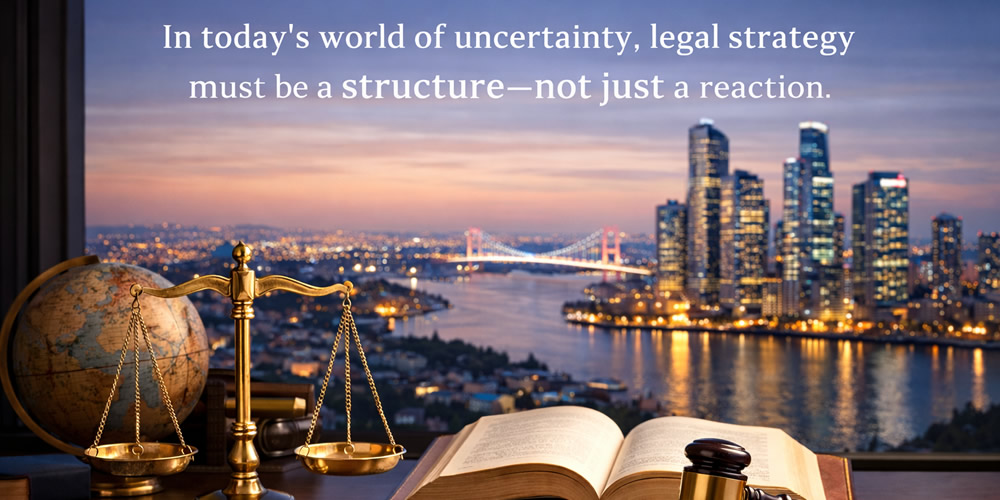
⚖️ Lawyer vs Attorney vs Barrister vs Solicitor: Beyond Definitions
In many jurisdictions, these titles describe distinct professional roles. However, focusing only on definitions can be misleading. For international clients, the real question is not what these terms mean in theory, but how they influence legal strategy in practice.
The term lawyer is the most global and flexible. It reflects the need for a professional who can navigate multiple legal environments. Clients who search for a lawyer in Turkey are usually looking for clarity, continuity, and strategic coordination across borders.
The term attorney is widely used in the United States and often associated with strong contractual and transactional control. Businesses and investors frequently prefer working with an experienced attorney in Istanbul when entering new markets, negotiating commercial agreements, or structuring corporate expansion.
In the United Kingdom, the distinction between barrister and solicitor reflects a structural separation between preparation and courtroom advocacy. Clients expecting litigation or formal disputes may search for a Turkish barrister, seeking courtroom strength, persuasive advocacy, and strategic positioning.
Others, particularly those focused on advisory and long-term planning, may resonate more with the solicitor model. Structured transactions, citizenship processes, and complex documentation often lead investors to look for a solicitor-style approach in Turkey, emphasizing preparation, risk control, and procedural clarity.
Ultimately, these distinctions are not about titles. They are about expectations. The best legal strategy aligns these expectations with the institutional realities of the Turkish legal system.
⚖️ Common Law and Civil Law: Structure vs Flexibility
Common law systems, such as those in the UK and the US, evolve through precedent and judicial interpretation. They provide flexibility and adaptability, but they also introduce grey zones where outcomes may depend on argument, interpretation, and evolving case law. This flexibility can be an advantage in dynamic markets, yet it also increases uncertainty.
Civil law systems, including Turkey, emphasize structured reasoning, written documentation, and procedural discipline. Judges focus on legal coherence and documentary strength rather than theatrical advocacy. This creates a different strategic environment. Preparation, foresight, and clarity become more important than improvisation.
For international investors, this difference is not a limitation. It is a strategic opportunity. When properly understood, the structured nature of civil law can reduce volatility and improve predictability in long-term planning.
⚖️ Why the Turkish Legal System Creates Strategic Continuity
One of the most significant advantages of the Turkish legal system is its integrated professional structure. Unlike jurisdictions where legal work is divided between multiple specialists, Turkish lawyers are fully authorized to advise, negotiate, and represent clients in court.
This continuity reduces communication gaps and strengthens alignment between legal planning and execution. It allows strategy to evolve without losing coherence. For cross-border investors, this integration often leads to faster decision-making, more efficient coordination, and stronger risk management.
Instead of managing separate advisors for different phases of a matter, international clients benefit from a unified legal perspective. This creates a resilient framework in high-value transactions, corporate structuring, dispute resolution, and long-term asset protection.
⚖️ Strategic Legal Representation for Cross-Border Investors
International investors rarely seek legal services for routine reasons. They seek control, predictability, and long-term stability. Legal representation in Turkey should therefore be viewed as part of a broader strategic architecture.
Working with the <a href=”https://www.oznurpartners.com/best-lawyer-in-turkey/” target=”_blank”>best lawyer in Turkey</a> is not about prestige. It is about aligning legal structure with business objectives, managing institutional risk, and ensuring continuity across jurisdictions.
Whether the goal is investment, corporate governance, dispute prevention, or wealth protection, a strategic approach transforms legal work into a long-term advantage. In a global environment shaped by uncertainty, resilience and clarity become the true indicators of legal strength.
⚖️ Frequently Asked Questions
✅ Why do international clients use different legal titles when searching in Turkey?
International clients rarely search randomly. The legal title they use often reflects their institutional background, risk perception, and decision-making culture. UK investors may associate barristers with courtroom strength and structured advocacy, while US clients tend to prefer the term attorney because of its connection with contractual control and transactional discipline. Other global investors may simply search for a lawyer who can coordinate complex cross-border matters.
Understanding this psychological and institutional context allows a Turkish legal team to align communication, strategy, and risk management with client expectations. This alignment reduces friction, improves decision-making, and strengthens trust in unfamiliar legal environments.
✅ Is there a real difference between a lawyer, attorney, barrister, and solicitor in Turkey?
In Turkey, there is no formal separation between these roles. Turkish lawyers are fully licensed to provide advisory, transactional, and courtroom representation. The difference exists mainly in terminology and expectations shaped by common law systems.
For international clients, this integrated structure can be a strategic advantage. Instead of coordinating multiple professionals across different phases of a matter, they benefit from continuity, coherence, and unified legal oversight. This reduces communication gaps and enhances the consistency of long-term strategy.
✅ Why do UK clients often search for a barrister when planning litigation in Turkey
Many UK clients associate barristers with persuasive advocacy, analytical reasoning, and courtroom positioning. When facing disputes in a foreign jurisdiction, they seek a similar level of strategic preparation and confidence.
In Turkey, the absence of a strict division between barristers and solicitors allows a single legal team to design the case, manage evidence, and advocate in court. This continuity often creates a stronger and more resilient litigation framework, particularly in high-value or complex disputes.
✅ Can Turkish lawyers manage both advisory and courtroom work effectively?
Yes. The Turkish legal system authorizes lawyers to handle both advisory and litigation processes. This integrated model allows strategy to evolve without fragmentation.
For investors and businesses, this means faster responses, clearer communication, and stronger alignment between planning and execution. In cross-border transactions, where timing and coordination are critical, this continuity significantly reduces risk.
✅ Why is legal continuity important for international investors and businesses?
Fragmented legal advice is one of the most common sources of strategic failure in cross-border matters. When different advisors handle separate stages of a process, institutional memory and long-term perspective can be lost.
Continuity ensures that legal strategy remains aligned from the first structuring decision to the final execution. It also strengthens governance, improves risk control, and increases resilience in uncertain environments.
✅ Is choosing a legal representative in Turkey only a technical decision?
No. It is a structural and strategic decision. The legal team selected at the beginning of a transaction or dispute often determines the quality of risk management, documentation, and negotiation dynamics.
For international clients, legal representation should be viewed as part of a broader architecture of control and governance. A well-designed legal strategy does not only solve problems; it prevents them, reduces volatility, and protects long-term interests.