

Did a Turkish Relative Hide Property Before Death? Muris Muvazaası Explained.
When a Turkish relative passes away and you find that property was transferred to someone else just months before, the real question is not whether something happened, it is whether the law lets you do anything about it. For foreign heirs who learn of an estate from abroad, the natural assumption is that a registered title deed transfer is final. Turkish law sees it differently.
Muris muvazaası is a Turkish legal doctrine that allows the rightful heirs to challenge a property transfer that was disguised as a sale but was, in truth, a gift made by the decedent to defeat the inheritance. It carries no statute of limitations, applies to transfers made years or even decades before death, and is available to any heir regardless of whether they hold a reserved share. For foreign heirs, it is often the single most important remedy in the Turkish inheritance system.
This page explains what muris muvazaası is, how it applies to foreign heirs, what evidence Turkish courts look for, how the litigation works in practice, and how it differs from related remedies such as the abatement action.
⚖️ What Is Muris Muvazaası in Turkish Inheritance Law
Muris muvazaası is a Turkish legal doctrine that addresses one of the most common forms of inheritance fraud: a property transfer that is documented as a sale but is, in reality, a gift made by a person before death to deprive the rightful heirs of their share. The Turkish term combines muris, the decedent, with muvazaa, simulation, together describing a transaction in which the visible legal act differs from the true intent of the parties.
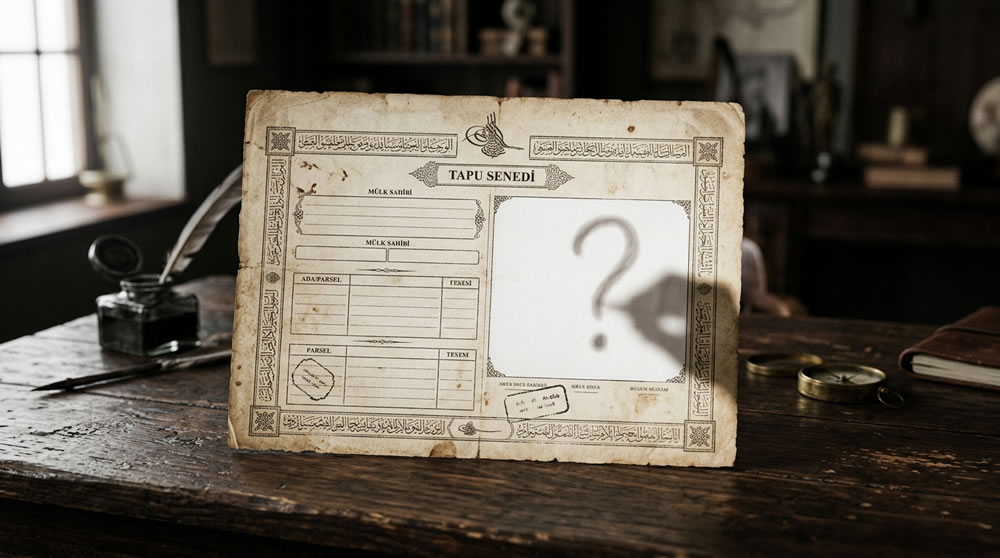
The doctrine rests on a two-layer legal failure. On the surface, the title deed shows a sale: a price is recorded, a buyer is named, and the property changes hands at the land registry. Beneath the surface, no real sale takes place. Either no money is paid, or the amount paid bears no relationship to the property’s actual value, and the true purpose of the transfer is to gift the property to a chosen recipient, most often a second spouse, a favored child, or a close relative, while keeping it out of the eventual estate.
Under Turkish Code of Obligations Article 19, the visible transaction (the sale) is void because it does not reflect the genuine agreement between the parties. The underlying transaction (the gift) is also void, because Turkish Civil Code requires gifts of immovable property to be made in a specific notarial form that a simulated sale does not satisfy. The result is that the transfer collapses on both legal layers: the property never legally left the decedent’s estate, and the heirs are entitled to have the title deed cancelled and the property returned to the inheritance.
The foundational ruling on this doctrine is the Court of Cassation’s General Assembly Decision dated 1 April 1974, numbered 1/2 (Yargıtay İçtihadı Birleştirme Kararı 1.4.1974, 1/2). This decision unified conflicting lower court approaches and established that any heir, whether or not they hold a reserved share, can bring an action based on muris muvazaası to recover property that was simulated out of the estate. This is one of the most important features of the doctrine and one of the reasons it remains a powerful remedy fifty years later.
⚖️ Why Muris Muvazaası Matters Especially for Foreign Heirs
Foreign heirs face a distinct problem that domestic heirs rarely encounter to the same degree: distance and delayed information. A Turkish relative dies, and the news may reach a child, sibling, or grandchild abroad through informal channels weeks or months later. By the time the foreign heir is in a position to look into the Turkish estate, the property they expected to find in the inheritance is often already in another name on the title deed.
The transfer often took place in the final years of the decedent’s life, sometimes during a period of declining health, and almost always to someone with close access to the decedent: a second spouse, a caretaker who became a partner, an adult child from a later marriage, or a close relative who handled the decedent’s day-to-day affairs. From the foreign heir’s perspective, the discovery is jarring. The property was supposed to be there. Now it is gone, the title deed shows a routine sale, and the practical assumption is that nothing can be done.
This is precisely where muris muvazaası changes the picture. Turkish law does not treat the title deed as conclusive proof of a real sale. If the surrounding circumstances suggest that no genuine sale took place, the heirs can ask a Turkish court to look behind the registry and determine the true nature of the transaction. For a foreign heir who has spent years away from Turkey and has limited direct evidence of what happened, this is a significant procedural advantage: the court is permitted to draw inferences from indirect evidence, and the burden of explaining a suspicious transfer often shifts in practice to the person who received the property.
The remedy is also well suited to the international context because it addresses the structural reason foreign heirs are targeted in the first place. A decedent who wishes to redirect property away from heirs living abroad knows that those heirs are unlikely to discover the transfer in time, unlikely to act quickly, and often unfamiliar with Turkish procedure. Muris muvazaası removes the time pressure and gives foreign heirs the same recovery rights as domestic heirs, regardless of when the discovery is made.
⚖️ No Statute of Limitations: Why It Is Not Too Late
One of the most distinctive features of muris muvazaası, and the feature that most often surprises foreign heirs, is that the action is not subject to a statute of limitations. A title deed cancellation lawsuit based on muris muvazaası can be filed five years after the decedent’s death, twenty years after the transfer, or longer. The passage of time alone is not a defense.
This is exceptional in Turkish civil procedure. Most claims involving property, contracts, or compensation are subject to limitation periods ranging from one to ten years, after which the right to sue is extinguished. The Court of Cassation’s reasoning for treating muris muvazaası differently is rooted in the doctrine itself: because the simulated sale is void from the outset, no valid transfer ever took place, and there is no transaction whose anniversary could start a limitation clock. The property remained part of the estate the entire time, even though the title deed suggested otherwise.
For foreign heirs, this rule is the practical foundation of the entire remedy. It means that an heir who learns about a Turkish estate years after the fact is not procedurally barred from acting. It also means that a transfer made deep in the past, perhaps when the decedent was already ill or under the influence of the eventual recipient, can still be challenged today. The relevant question is not when the transfer happened, but whether the evidence supports the conclusion that it was a simulated gift rather than a real sale.
This does not mean delay is costless. Witnesses age and become harder to locate, financial records become harder to recover, and the recipient may have transferred the property again or made improvements that complicate restitution. But the door to the courthouse remains open, and the foreign heir who acts even years after the discovery is not automatically out of time.
⚖️ How Turkish Courts Identify a Simulated Sale
Because a properly executed muris muvazaası rarely leaves direct evidence (the parties to a simulated transfer do not normally write down that they are simulating it), Turkish courts rely on a body of indirect indicators that, taken together, allow the judge to conclude whether the recorded sale reflected a real transaction or a disguised gift. The Court of Cassation has developed and refined these indicators over decades of case law, and the analysis is now relatively standardized.
The most decisive factor is usually the price. If the price recorded on the title deed is significantly below the property’s market value at the time of transfer, the court treats this as a strong indicator of simulation. A property worth one million Turkish lira that was transferred for one hundred thousand is not a sale that would occur between unrelated parties at arm’s length, and Turkish courts say so openly.
The second factor is the financial capacity of the buyer. If the person who received the property had no documented income, savings, or assets sufficient to pay the recorded price, the court will infer that no real payment took place. Bank records, tax filings, employment history, and prior asset ownership are all relevant. A young adult child with no income who suddenly purchases a valuable apartment from an aging parent is a recurring fact pattern in muris muvazaası case law.
The third factor is the relationship between the parties. Transfers between a decedent and a second spouse, a child from a later marriage, a long-term caretaker, or a close relative receive heightened scrutiny, particularly when those transfers occurred close to the time of death or during a period of declining health.
The fourth factor is what happened after the transfer. If the decedent continued to live in the property, continued to collect rent from it, continued to pay its taxes, or continued to treat it in every practical sense as their own, the court will conclude that no real transfer of ownership took place. The simulated buyer’s failure to behave like an actual owner is often the most powerful evidence in the case.
The fifth factor is the decedent’s overall behavior and intent. Statements made to other family members, the existence of a pattern of transferring assets to one favored recipient, the timing of the transfer relative to a deteriorating relationship with the foreign heirs, and the decedent’s age and health at the time of transfer are all relevant. None of these factors alone is decisive, but together they give the court a complete picture of whether the recorded sale reflected reality or concealed a gift.
⚖️ How a Muris Muvazaası Lawsuit Works in Practice
A muris muvazaası action is a title deed cancellation and registration lawsuit, technically known as a tapu iptal ve tescil davası, filed in the civil court of first instance (asliye hukuk mahkemesi) where the property is located. The plaintiff is the heir or heirs seeking to have the property returned to the estate; the defendant is the person currently shown on the title deed as the owner.
The action begins with a careful evidentiary file. Before the lawsuit is filed, counsel typically obtains the title deed history, the original sale documents, any available financial records of the buyer, expert valuation evidence on what the property was worth at the time of transfer, and witness statements where available. The strength of the case at the filing stage often determines how quickly the court is willing to grant interim measures and how the defendant approaches settlement.
Once the lawsuit is filed, the court will typically order a court-appointed expert (bilirkişi) to assess the property’s market value at the time of the transfer. This valuation is one of the most important pieces of evidence in the case, because a substantial gap between the recorded sale price and the expert’s market value is one of the strongest indicators of simulation. The court will also examine financial records to determine whether the recorded price could plausibly have been paid.
An interim measure (ihtiyati tedbir) is often requested at the outset to prevent the defendant from selling or encumbering the property during the lawsuit. Whether this is granted depends on the strength of the initial evidence and the perceived risk of disposal. Where granted, the title deed will carry an annotation preventing further transactions until the case concludes.
The duration of a muris muvazaası lawsuit varies. A straightforward case with strong documentary evidence may conclude at first instance within twelve to eighteen months. A contested case with multiple expert reports, witness examinations, and challenges to evidence can take longer, particularly if appealed. Appeals to the regional court of appeal (bölge adliye mahkemesi) and ultimately the Court of Cassation are common in significant cases, and the full process from filing to final judgment can take three to four years.
If the lawsuit succeeds, the court orders the cancellation of the title deed in the defendant’s name and registration in the names of the heirs in proportion to their inheritance shares. The property returns to the estate and is then distributed according to ordinary inheritance rules, including any reserved share entitlements.
⚖️ Muris Muvazaası vs. Tenkis Davası: Two Different Remedies
Foreign heirs sometimes confuse muris muvazaası with the abatement action, known in Turkish as tenkis davası. The two remedies address related but distinct problems, and the choice between them, or the decision to pursue both, depends on the facts.
The tenkis davası is the remedy for transfers that genuinely took place but that infringed on a reserved-share heir’s protected portion. If a parent legitimately gifted or sold property below value during life, and the result is that a reserved-share heir (such as a child or surviving spouse) receives less than the law guarantees, the tenkis davası allows that heir to recover the value needed to restore the reserved share. The transfer itself is treated as valid; the remedy is monetary or in-kind compensation up to the reserved share threshold. This action is subject to limitation periods, typically one year from when the heir learns of the infringement and ten years in any event.
The muris muvazaası action, by contrast, treats the transfer as void from the start. The remedy is not partial compensation but full restoration: the property returns to the estate as if the transfer had never happened. The action is available to any heir, not only reserved-share heirs, and is not subject to a statute of limitations.
The practical difference is significant. A tenkis claim might recover a fraction of the property’s value; a muris muvazaası claim recovers the property itself. A tenkis claim filed too late is barred; a muris muvazaası claim is not. For foreign heirs, who often act years after the events and who frequently want the underlying property recovered rather than partial compensation, muris muvazaası is usually the stronger and more appropriate remedy when the facts support it.
In some cases, both actions are filed together or in the alternative, with muris muvazaası as the primary claim and tenkis as a fallback if the court concludes that the transfer was real but infringed reserved shares. Choosing the right combination is a matter of legal strategy based on the specific evidentiary picture.
⚖️ When to Consult a Turkish Inheritance Lawyer
The earlier a foreign heir consults Turkish counsel after discovering a suspicious property transfer, the more options remain available. An early consultation allows counsel to obtain title deed records, identify the timing and structure of the transfer, locate witnesses and financial records before they become harder to reach, and assess whether to file for an interim measure to prevent further disposal of the property.
Even where significant time has passed, consultation remains worthwhile. The absence of a statute of limitations means that an old case is not automatically a lost case, and the analytical framework Turkish courts apply has not changed materially in decades. What matters is the quality of the evidence and the coherence of the narrative the heirs can present.
For foreign heirs in particular, working with a Turkish law firm that handles international inheritance matters is important. The procedural mechanics of obtaining a Turkish certificate of inheritance from abroad, of recognizing foreign documents, of communicating with Turkish courts in a language other than Turkish, and of coordinating with foreign counsel where parallel proceedings exist all require experience that general-practice firms may not have.
❓ Frequently Asked Questions about Muris Muvazaası
✅ Can I file a muris muvazaası lawsuit if my Turkish relative died ten years ago?
Yes. Muris muvazaası is not subject to a statute of limitations. The lawsuit can be filed regardless of how long ago the decedent passed away or how long ago the suspicious transfer took place. What matters is whether the evidence supports the conclusion that the recorded sale was in reality a simulated gift. Practical challenges of older cases (locating witnesses, recovering financial records) are real, but they are evidentiary problems, not procedural bars.
✅ Do I need to be a reserved-share heir to file the lawsuit?
No. The Court of Cassation’s 1974 unifying decision established that any heir can bring a muris muvazaası action, including heirs who do not hold a reserved share. This is a key difference from the tenkis davası (abatement action), which is available only to reserved-share heirs.
✅ I live abroad and have never been to Turkey. Can I still pursue this?
Yes. Foreign heirs do not need to be physically present in Turkey to file or maintain a muris muvazaası lawsuit. The case is handled by Turkish counsel acting under a power of attorney, which can be issued and notarized abroad and apostilled or legalized for use in Turkey. Personal appearances in court are rare in this type of litigation, and where required can often be handled by counsel.
✅ What if the person who received the property has already sold it to someone else?
This complicates but does not necessarily defeat the case. Turkish law distinguishes between the original simulated transferee and a subsequent good-faith purchaser. If the property has been sold to a genuinely independent third party who had no knowledge of the simulation, recovery of the property itself may not be possible, but compensation claims against the original transferee for the value of the property remain available. If the subsequent buyer was not in good faith, the claim against the property may still proceed. Counsel will assess the specific chain of transfers.
✅ How much does a muris muvazaası lawsuit cost?
Court fees in Turkish civil litigation are calculated as a percentage of the value in dispute, which in a property recovery case is typically the value of the property. Attorney fees are negotiated separately and depend on the complexity of the case, the value at stake, and the firm’s fee structure. Foreign heirs should expect a more substantial initial outlay than in domestic cases because of the additional documentary work involved in establishing standing from abroad. A precise estimate requires a review of the specific facts.
✅ Can I get an interim measure to stop the property from being sold while the lawsuit is pending?
Yes, this is commonly requested at the outset of a muris muvazaası case. The court will assess the strength of the initial evidence and the risk of disposal before granting an interim measure (ihtiyati tedbir). Where granted, an annotation is placed on the title deed preventing further transactions during the litigation. The application typically requires security in an amount set by the court.
✅ How is muris muvazaası different from contesting a will?
A will contest challenges the validity of a testamentary disposition (a will or testament) made by the decedent. Muris muvazaası, by contrast, challenges a transfer made during the decedent’s lifetime that was disguised as a sale. The two are independent remedies and address different problems. A foreign heir may have grounds for both if the decedent both made a contested will and made suspicious lifetime transfers, in which case both actions can be pursued in parallel.
Schedule a Legal Consultation
If you suspect that a Turkish relative transferred property before death, have recently discovered an estate that should have included assets now in another name, or need an independent assessment of your inheritance rights from abroad, our Inheritance Lawyers in Istanbul are available for an initial consultation.
Related pages: Turkish Inheritance Law Firm · Inheritance Law for Foreigners in Turkey · How Foreigners Inherit Property in Turkey · Inheritance Dispute Resolution in Turkey · Tapu İptal ve Tescil Davası